Why selling early usually beats a court sale
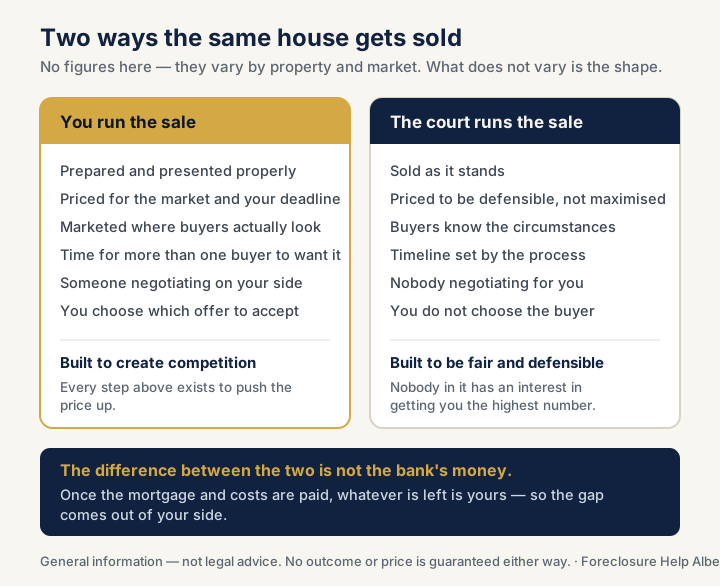
When you sell, you control the price you list at, the condition the home is shown in, how long it stays on the market, and which offer you accept. When the court sells, none of those are yours. The property is generally marketed as what it is, buyers know the situation, and offers reflect that.
The gap between those two outcomes is not the bank's money. Whatever is left after the mortgage and the costs of the process is yours — so anything that widens that gap goes into your pocket.
Your redemption window is your selling window
Once the court has set the terms, there is normally a period before the sale in which you can still sell the property yourself. Homeowners who use that window are selling a house. Homeowners who do not are having one sold for them. See where that window sits in the process.
What a properly run sale looks like
Professional photography, correct pricing for the current Medicine Hat market, real exposure on the MLS® system and the portals buyers actually use, and someone negotiating on your side. It also means being realistic: a home priced to sell within your timeline, not priced on hope. A licensed agent who understands the deadline you are working against is worth far more than one who does not.
What if there is not much equity?
Then the maths change, and you should know that before you list rather than after. Sometimes selling still makes sense; sometimes another route does. We will tell you honestly which one your numbers point to, including when the answer is "this is not the option for you."
Where this happens if you are in Medicine Hat
A sale still has to be confirmed by the court, and the transfer still has to be registered. Both happen in specific places, and knowing which ones saves time you may not have:
- Court: Medicine Hat Law Courts, 460 First St SE
- Land Titles: Land Titles South
Neither changes what your home is worth. They change how long the paperwork takes, which is the part that bites when a court date is already set.